

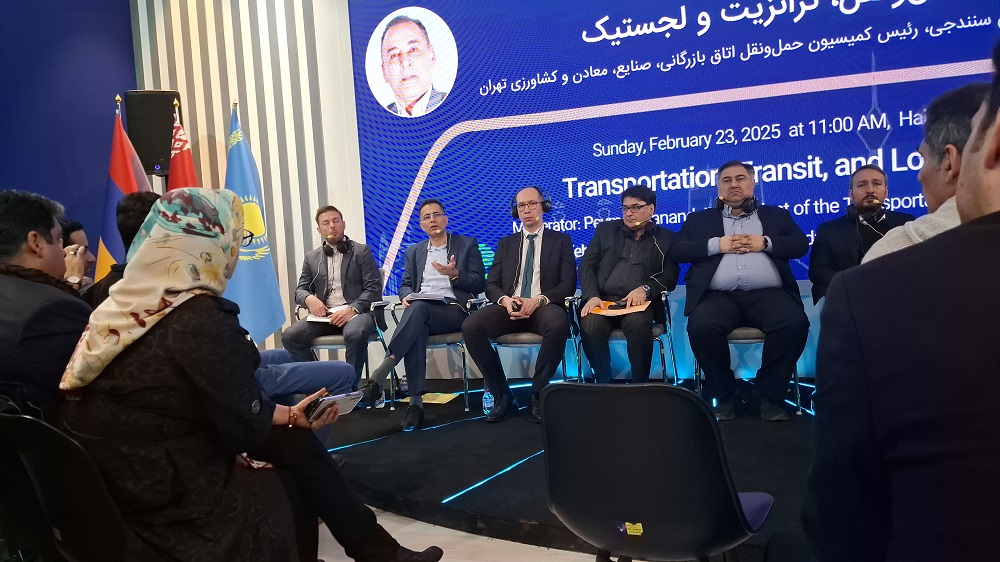
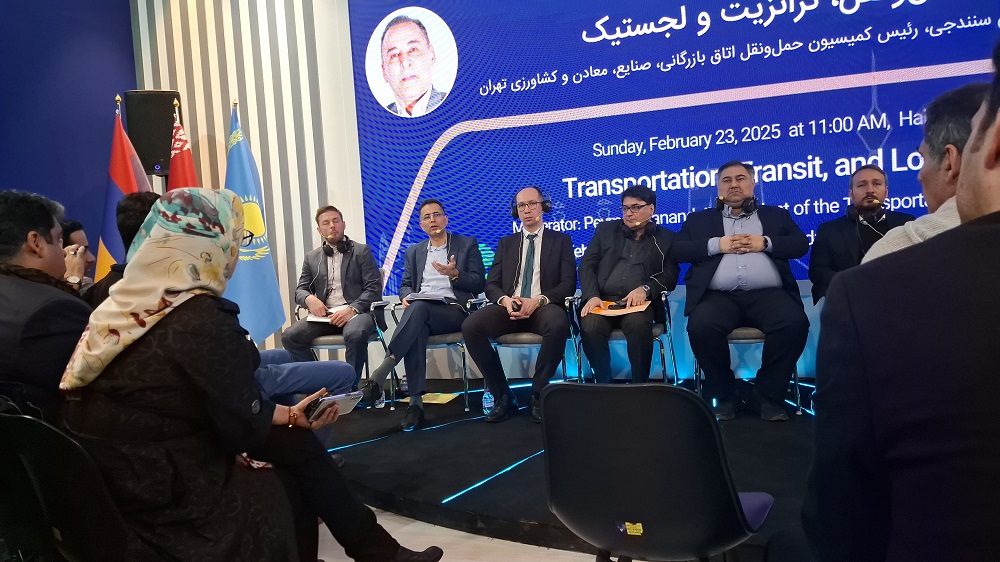
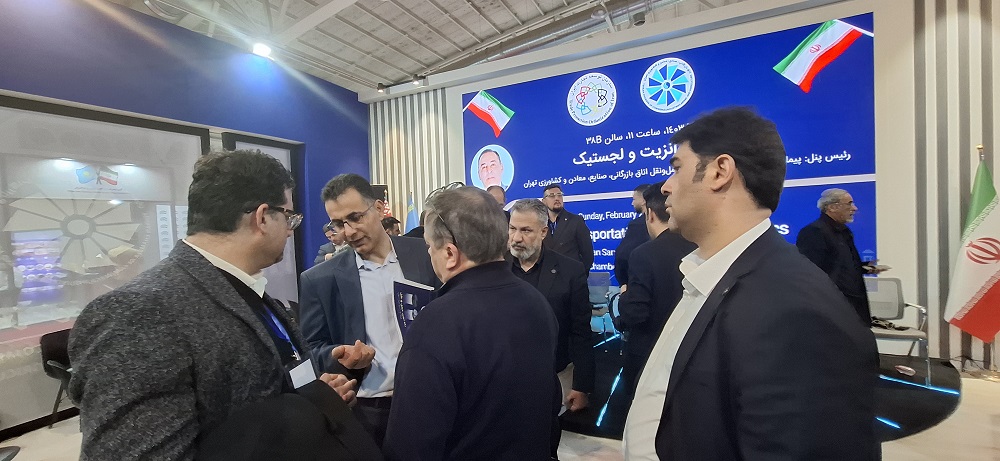
According to the Public Relations Office of the RWT Company, on February 23, 2025, the third day of the Third Eurasia International Trade Exhibition, a specialized panel on Transport, Transit and Logistics was held with a keynote address by Dr. Hassan Sedighi, CEO of the RWT Company. The event brought together representatives of the public and private sectors, industry experts, and domestic and international participants.
Introducing the RWT Company as one of Iran's leading rail freight operators, Dr. Sedighi noted that the company owns a fleet of approximately 2,700 freight wagons, accounts for nearly 10 percent of Iran's rail freight market, and is internationally recognized under the RWT brand, particularly across the CIS region.
Addressing the challenges facing Iran's railway sector, he stated that numerous national and international obstacles have hindered the full development of the International North–South Transport Corridor (INSTC). Owing to time constraints, he focused on practical solutions rather than outlining the challenges in detail.
Dr. Sedighi identified political, cultural, economic, commercial, and infrastructure-related factors as the principal determinants of the corridor's success. He emphasized that diplomacy remains the most influential international factor, noting that fluctuations in political relations among the participating countries have an immediate impact on regional trade volumes.
He also highlighted the adverse effects of economic sanctions, explaining that the expansion of sanctions on countries located along the corridor directly reduces cross-border trade. According to Dr. Sedighi, cargo owners and international traders consistently seek secure and predictable trade routes while avoiding high-risk environments.
Emphasizing the importance of long-term commitment by participating countries, he stated that sustained growth of the North–South Corridor depends on joint investment initiatives. Such investments, particularly in logistics infrastructure at strategic border crossings including Incheh Borun and Sarakhs, would significantly enhance the corridor's competitiveness. He confirmed the company's readiness to participate in such projects as a private-sector investor.
Dr. Sedighi further stressed that participating countries must remain committed to their bilateral and multilateral agreements. Since operational protocols derive from broader political and economic arrangements, unilateral changes to tariffs, technical standards, or operational procedures aimed at short-term gains could undermine the long-term viability of the corridor.
He also identified multimodal transportation as one of the most effective solutions for revitalizing the corridor and activating its various branches. He underlined the need for integrated transport solutions that enable efficient transfers between rail and road without increasing handling costs or transit time. According to him, multimodal transport supported by modern logistics hubs equipped with advanced cargo-handling technologies will substantially increase transit volumes through Iran's railway corridors.
Concluding his remarks, Dr. Sedighi stated that standardization, advanced technologies, digital platforms, and logistics marketplaces are among the key factors that can improve information exchange between coordinating institutions and economic operators, thereby facilitating greater transit traffic through Iran.