


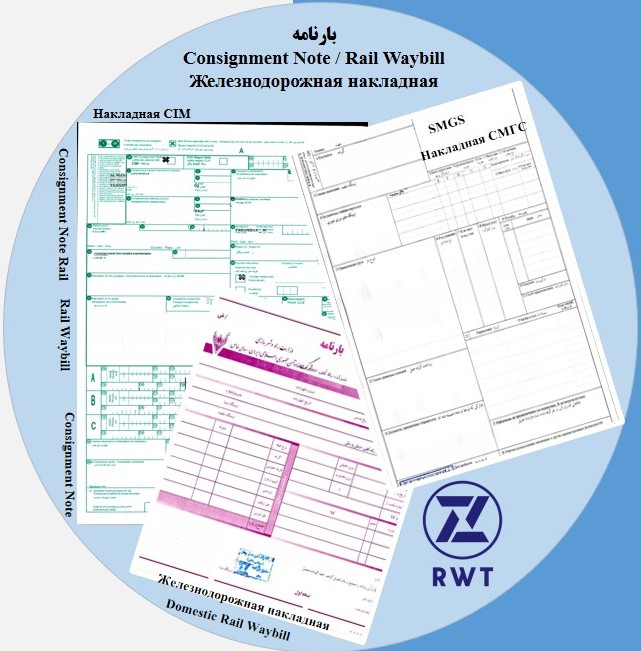
Rail waybills are official transport documents that record shipment details, parties to the contract, origin, destination, cargo specifications and carriage conditions. They serve as the legal and operational basis of rail freight transportation and may be issued in different formats, including Domestic Rail Waybills, CIM Consignment Notes and SMGS Consignment Notes. The type of waybill depends on the geographical scope of transport, applicable regulations and railway networks involved.
What is a Rail Consignment Note?
A rail consignment note is a transport document that records the terms and particulars of the contract of carriage for a shipment. It normally contains information such as the consignor, consignee, origin, destination, commodity, weight, wagon details and applicable conditions of carriage.
What is a Domestic Rail Waybill?
A domestic rail waybill is a transport document issued for the carriage of goods within the Iranian railway network. It records essential shipment information, including the consignor, consignee, origin, destination, commodity, weight and applicable domestic transportation conditions.
What is a CIM Consignment Note?
A CIM consignment note is an international rail transport document used for consignments subject to the CIM Uniform Rules. It records the shipment details and terms of the contract of carriage and is widely used in international rail freight operations, particularly on routes involving Europe.
What is an SMGS Consignment Note?
An SMGS consignment note is an international rail transport document used for shipments governed by the SMGS Agreement. It is widely used on rail freight routes involving CIS countries and railway networks operating predominantly on 1,520 mm gauge.